












How to Drain a Dishwasher Safely

How to Drain a Dishwasher Safely
Why your dishwasher might be failing to drain
You might have noticed water collecting at the bottom of your appliance, your dishes coming out of a cycle unclean, or even a gurgling sound you've never noticed before — these are all indicators of a dishwasher failing to drain correctly. Here are a few things that could be causing it:
- Blocked filter: Food debris and grease can cause a build-up in your dishwasher over time. When this happens, water can't flow, creating a puddle.
- Clogged drain hose: This is the pipe that takes dirty water out of your dishwasher. If this is clogged or kinked, it won't work as it should.
- Clogged sink waste: Sometimes dishwashers drain through the kitchen sink's plumbing system; if there's a blockage here, it won't drain.
- Limescale build-up: 60% of the UK has hard to very hard water, which can cause limescale build-up in pipes and components, restricting water flow in your appliance.
- Electrical issues: If it's not caused by a blockage, a faulty sensor, timer, or control board might prevent the cycle from running correctly.
How to drain your dishwasher safely
Draining your dishwasher yourself is possible — but knowing how to do it correctly is essential not only to your appliance, but to your safety, too! Here are a few tips to help you get started:
-
Turn off the power and water supply
This is an essential step when working with electrical appliances and water.
-
Remove any standing water
Use a cup or small container to scoop out as much water as possible from the bottom of the dishwasher manually. If there's any leftover, soak it up with a sponge or towel.
-
Check and clean the filter
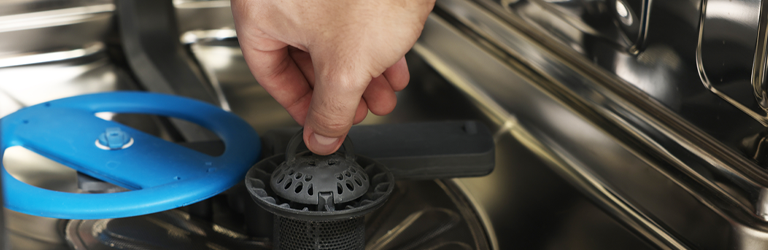
The filter is located at the bottom of the machine. Remove this and rinse it under warm water to remove any debris or grease build-up.
-
Inspect the drain area
Have a look at the drain to see if there's any build-up or visible blockages and remove them if so.
-
Check the drain hose
If you can, look at the drain hose to see if there are any blockages or kinks. If you can disconnect it, run some hot water through it to clear any build-up. This may be more difficult to access in an integrated dishwasher.
-
Restore power
When all the components are back in place, turn the dishwasher's water supply and electricity back on.
-
Run a short cycle
Run a short cycle or rinse to check whether the dishwasher is draining correctly.
Checking filters and drainage
A blocked dishwasher is typically due to filter and drainage problems, so knowing how to check these components confidently is helpful:
Filters are placed below the spin arm. They can usually be twisted and removed. You can wash them with warm running water and a brush, but be careful not to use anything too harsh, like abrasive scrubbers.
The sump is the area beneath the filter. This can become clogged, so make sure you look inside to check there's nothing in there that shouldn't be.
The drain hose at the back of the dishwasher should also be checked if it's easy to access. Disconnecting it can get rid of any kinks or blockages.
Cleaning your dishwasher regularly can prevent blockages from happening.
DIY fixes vs. calling the experts
DIY dishwasher fixes can save you money, but there are some things you shouldn't try to handle without expert advice.
DIY fixes include:
- Blocked or dirty filters: A good clean will fix these components.
- Minor drain blockages: Cleaning the sump or drain hose can clear any blockages.
- Kinked or misaligned hose: Repositioning the appliance's hose could be a quick fix for blockage issues.
- Limescale build-up: Use a dishwasher-safe cleaner to remove minor limescale build-up and restore drainage.
Expert help may be needed for:
- Persistent drainage issues: If water is still pooling at the bottom of your appliance, there is likely another issue that will need further exploration.
- Electrical and control faults: If you find there's a problem with the control panel or any of the electrics within your dishwasher, you'll need an expert to look at this.
- Leaks or water damage: If your dishwasher is leaking or worse, causing water damage, you should call an expert immediately.
- If you're unsure: If there's anything you're unsure of doing yourself, it's always best to call an expert.
How to keep your dishwasher working as it should
There are a few things you can do to avoid having to unblock your dishwasher or calling an expert for an expensive repair — mainly, cleaning. Typically, manufacturers recommend cleaning your dishwasher every 1–3 months, with more regular cleaning if it starts to smell or you use it all the time.
- Clean the filter: Remove and clean the filter every few weeks to prevent build-up.
- Scrape plates: Remove food scraps before loading your dishes.
- Avoid overloading: This prevents water from circulating properly.
- Load items correctly: Ensure you're not blocking the spray arms or drainage area.
- Use the correct detergent dosage: Too much detergent can cause residue build-up.
- Check the spray arms: Check there's no blockage on the small holes on the arms that could impact performance.
Is your dishwasher failing?
So, how do you know when your dishwasher can be fixed with a few DIY tricks, or when you need to replace your current appliance with a new one? Dishwashers don't tend to just stop working at once — there'll be signs that your dishwasher might be on its way out.
A quality dishwasher can last 10 years when maintained, so if your appliance is reaching this age, it might be time to look for a new one.
Here are a few signs that could point to your appliance coming to the end of its lifespan:
- Water pooling: While drainage issues can be fixed, if you find they're happening more often, it may be time for a professional opinion.
- Dishes are coming out dirty or greasy: This could point to an issue with the spray arms, water flow or filters.
- Unusual noises: Grinding, humming, and gurgling could all point to blockages, a loose component, or a failing pump.
- Cycles taking longer than usual: If your dishwasher is taking longer to complete a cycle, it might be struggling internally.
- Leaks or water around the appliance: This could signal worn seals or internal faults.
- Frequent resets: If you have to restart your cycle often, this could be due to an underlying fault with the control system.
If you notice your dishwasher is displaying one or more of these signs, getting a professional opinion is the best place to start. From here, you can decide whether a new dishwasher would be more economical than dealing with frequent repairs.
Find a new dishwasher at Marks Electrical from the biggest brands, including AEG, Bosch, Hisense and more.

 Added to your basket
 You've added an item to your basket.