












Induction vs Gas: Does Induction Really Keep Up?
Induction vs Gas: Does Induction Really Keep Up?
Induction hobs have quickly gained popularity in modern homes, rivalling the classic gas hob. But can these advanced hobs rival what has been a staple in homes and kitchens throughout the years? This guide breaks down the key differences between induction and gas hobs, from speed to maintenance and energy efficiency, so you can decide which one fits the bill.
Induction cooking
- Sleek, modern design
- No residual surface heat
- Instant response
- Less energy wasted
- Requires magnetic cookware
A modern way of cooking, induction hobs use electromagnetism to heat pans directly, rather than heating the surface of the appliance. They look similar to ceramic hobs, but copper coils beneath the surface generate a magnetic field, which passes into specialist pots and pans, heating them instantly.
Cooking with gas
- Traditional option
- Instant heat with temperature control
- Use any pots and pans
- Durable design and reliable without electricity
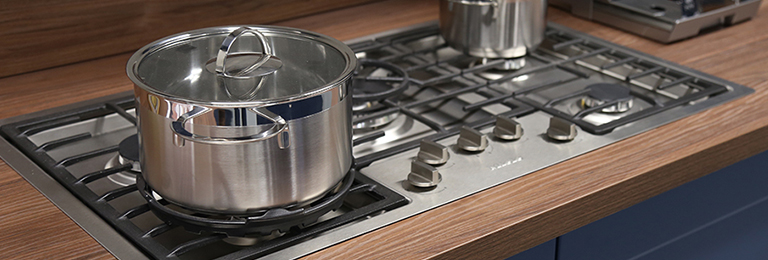
Often known as 'the chef's choice', gas hobs produce a controlled flame for instant heat whenever you need it. They work without electricity and are generally cheaper to run than an electric hob. Great for high heating, gas hobs are a durable and reliable option.
Induction vs Gas: Heating Comparison
| Feature | Induction Hob | Gas Hob |
|---|---|---|
| Heat speed | Extremely fast to heat up - instant heat thanks to the electromagnetic field | Responsive but slower to boil |
| Temperature control | Precise and consistent | Visual flame makes it less exact |
| Responsiveness | Cools down quickly when turned down | Offers instant adjustment |
Generally, induction hobs reduce cooking times by 30-50%, especially when it comes to boiling water. Gas hobs are effective, but can waste energy for noticeably less efficient cooking. Let's take a look at the following example:
You're putting together your favourite pasta dish after a long day at work, adding 1 litre of water to your saucepan to boil.
With an induction hob, it'll take around 3-4 minutes for the water to boil, compared to around 6-8 minutes with a gas hob. This is due to the amount of heat that escapes around the pan.
Or maybe you're cooking breakfast. When frying an egg, your induction hob heats in 60-90 seconds. It also maintains a steady temperature, meaning there's less risk of burning. With a gas hob, you'll wait around 2-3 minutes before you can start cooking your egg. These appliances can also create hot spots, which can cause food to cook unevenly.
Which is more energy efficient?
When it comes to induction vs gas hobs, induction appliances are significantly more energy efficient. This is because:
- Induction hobs heat the pan directly, wasting very little energy compared to gas hobs.
- Induction hobs heat faster, meaning you'll use the appliance for less time than you would with a gas hob.
- Gas hobs heat the air around the pan first, losing heat and therefore wasting more energy.
The price of induction and gas cooking
Switching to an induction hob could save households up to £10-£15 a month on energy costs in comparison to gas hobs. This is due to the 30-40% higher energy efficiency and faster cooking times.
However, it's worth noting that gas is cheaper than electricity, which means overall costs may balance themselves out depending on usage, even if gas hobs aren't as energy efficient.
A range of factors contribute to the total running costs of induction and gas hobs. For example:
- Cooking habits: If you're boiling water, induction is quicker and wastes less energy, but if you're simmering or slow cooking, gas may be a better option.
- Cookware: Using the right cookware improves how a hob heats, for less energy wasted.
- Hob power and usage: Induction hobs pull a lot of power quickly, but for a shorter period. Gas can run for longer at a lower intensity. If you're cooking for longer, a gas hob may work out cheaper.
- Energy tariff: Gas is typically cheaper than electricity. Induction hobs use electricity, so an off-peak tariff might make the appliance more affordable.
Cleaning and maintenance
No one likes cleaning the hob, but while it can be time-consuming, it's essential to keep the appliance working as it should. When it comes to induction hobs vs gas hobs, here's what you should expect:
Induction hobs are easier to clean, but have a less robust surface. Gas hobs require a little more elbow grease to keep them looking good as new, but are incredibly durable.
Induction hobs are flat and smooth, meaning you can just wipe them with a damp cloth. Gas hobs have burners, caps and metal grates, meaning there's more for dirt to stick to.
With induction hobs, spills don't burn on because the appliance doesn't get hot. It's easier for dirt to burn onto a gas hob as the grates and burners all become hot when cooking.
Maintaining your induction hob is also simple. There are fewer working parts with this type of hob, and therefore less to go wrong. However, the glass surface can become scratched and cracked if pots are dropped.
Gas hobs are incredibly robust and long-lasting, and it's easy to fix the individual parts of the appliance, although it's worth noting that burners can become clogged.
Who is an induction cooker a good choice for?
- Those looking for an easy-to-clean, low-maintenance option
- Those who cook quick, everyday meals
- Households looking to save energy
- Households that want a cooler or more comfortable kitchen
- Families with young children
Induction hobs are easy to clean thanks to the flat surface - you can wipe spills quickly and easily. For those tight on time, induction hobs heat up quickly, for less time spent waiting for your food to cook.
Induction hobs only heat the pan, reducing energy loss for potential savings on bills. This also means less heat escapes into the air, for a cooler kitchen in the summer months. For safety-conscious families, the surface of your induction hob remains cool, so there's no risk for little hands.
Who is a gas cooker a good choice for?
- Those who love hands-on, traditional cooking
- Those who want responsive heat control
- Households that prefer long, slow cooking methods
- Those who would prefer flexibility with cookware
- Those who are looking for a long-lasting appliance
If you're a traditional cook who wants a cooker you can rely on, a gas hob is a great choice. They're a great option for those looking for an appliance that's affordable to run, as well as a simple, easy-to-control appliance that works even if there's a power cut.
Induction and gas hobs would both suit a range of kitchens, but the hob you choose depends on your preferences.
At Marks Electrical, browse a range of induction hobs and gas hobs from the biggest brands today and take advantage of competitive prices.
Need help? Find more information in our cooker buying guides to help you make the right choice, or explore our range of cooking appliances, including ovens and range cookers.

 Added to your basket
 You've added an item to your basket.