












Oven Buying Guide

Oven Buying Guide
Choosing the right oven can make all the difference to your experience in the kitchen. Whether you're an aspiring chef, a hobby baker, or need to rustle up quick meals for the family, buying the right oven for your needs is essential.
Our oven buying guide offers you all the information you need to choose your ideal appliance from a huge range of brands. Below, we'll go through how to decide between gas or electric, built-in or built-under, and more
What is an oven?
The heart of the kitchen, ovens are an appliance made for baking, grilling, heating, and roasting. There's a range of different ovens to choose from, including gas, electric, multifunction, steam and more. A good oven will heat up quickly and spread heat evenly for effective cooking.
How to choose an oven
Choosing an oven can seem daunting with so many appliances to choose from, but it doesn't have to be. And at Marks Electrical, we can help. We've broken down choosing an oven into 8 steps, as well as FAQs to answer any questions you might have.
- Gas or electric ovens - which is best?
- Pick a type of oven
- Choose a single or double oven
- Built-in or built-under ovens
- Measure for your oven size
- Features to consider
- What about oven energy ratings?
- Choose an oven brand
1. Gas or electric ovens - which is best?
There are two main types of ovens: electric or gas.
The fuel type you choose will have an impact on your cooking, running costs, and overall experience in the kitchen. Find out more about the key features of each type of oven below:
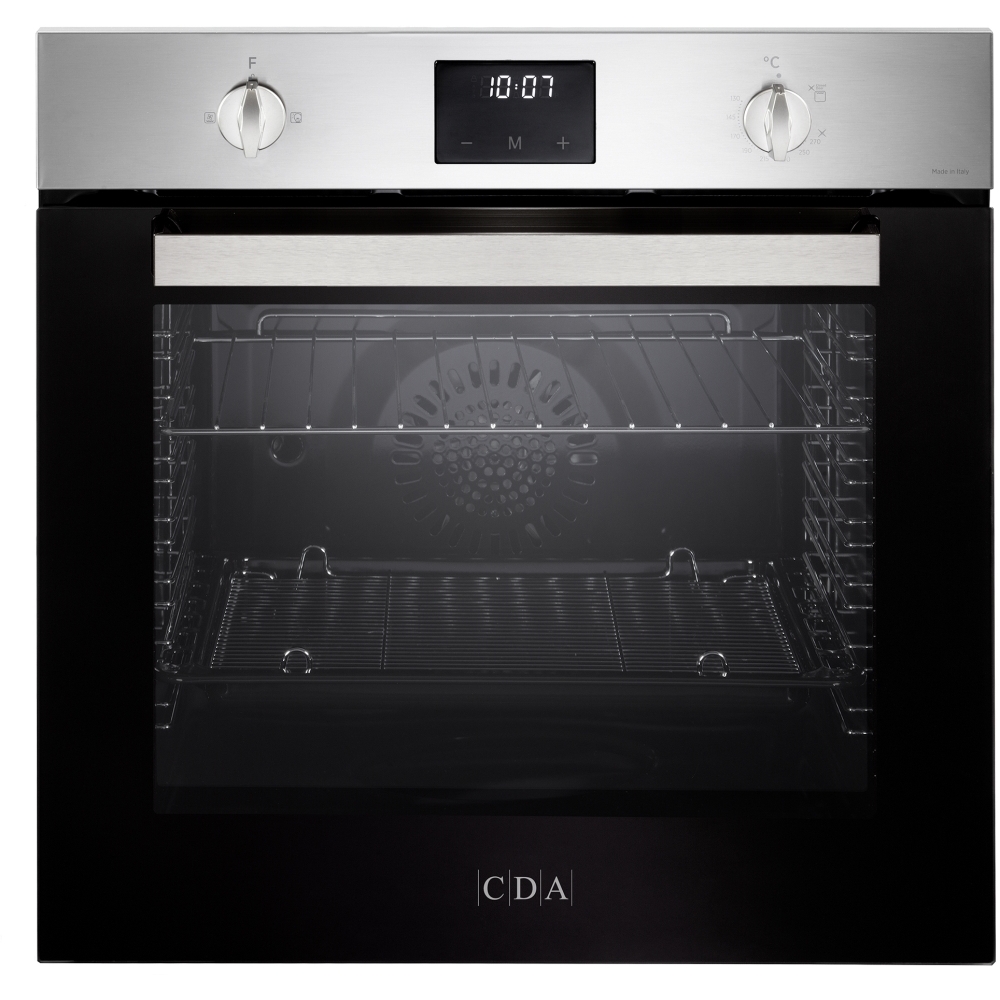
Gas ovens
A traditional choice, gas ovens are a popular way to cook a range of dishes. There are a few things to think about if you're considering this type of oven:
- They heat up more quickly than an electric oven, meaning you won't have to wait as long to get cooking
- Running a gas oven is more likely to cost less
- Gas ovens can last longer than electric ovens
- The upfront cost of a gas oven tends to be higher - and you need to consider install costs if you don't have an existing gas line in your kitchen.
- You'll need to keep a close eye when cooking, as the high temperature means food can often become overdone
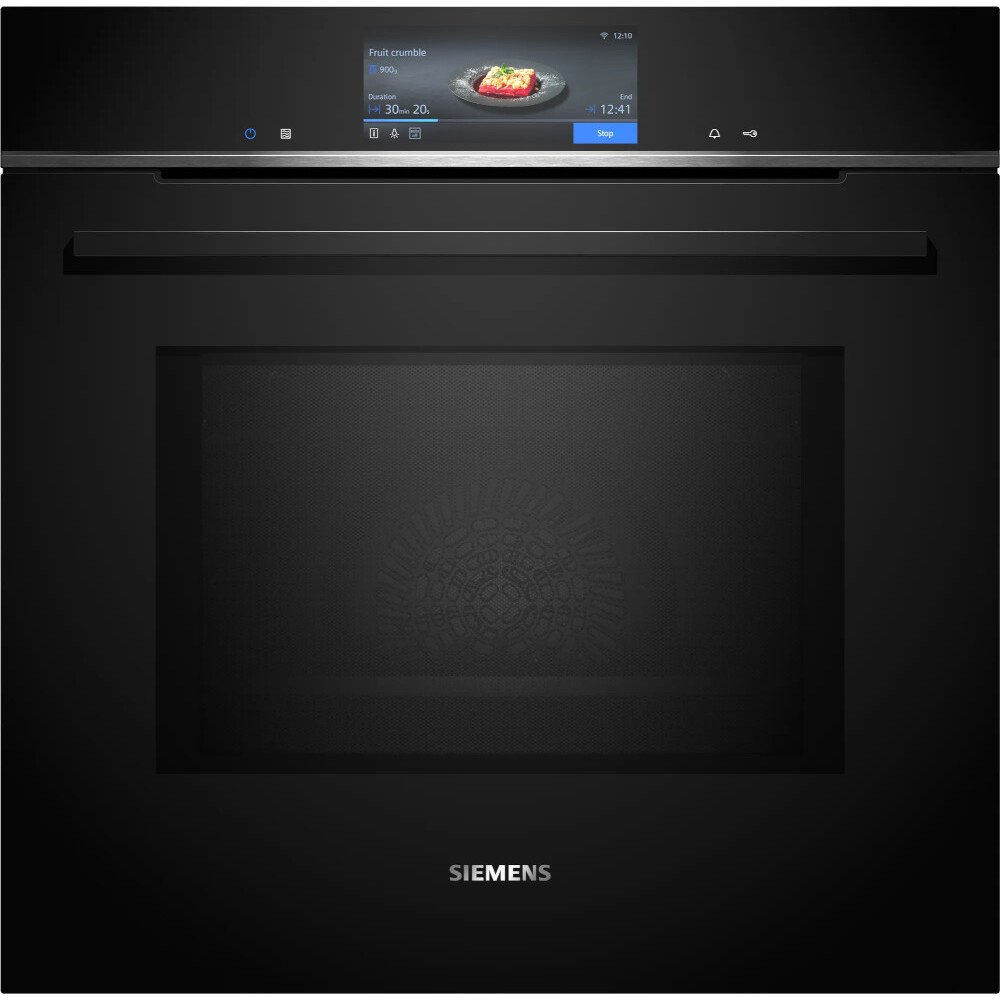
Electric ovens
Electric ovens are a great choice for everyday cooking as an alternative to gas. They're easy to use and come with the following features:
- Electric ovens tend to be cheaper upfront
- These appliances provide dry heat and have accurate temperature settings ideal for roasting and baking
- Electric ovens are easy to clean and come with a self-cleaning function
- Electric ovens take longer to respond to temperature adjustments and cook food
- It tends to be more expensive to run an electric oven than a gas oven
2. Pick a type of oven
Once you've chosen your fuel choice, you'll need to think about the type of oven you'd like to buy. There are a few options, so let's take a closer look at each below to help you make your decision.
Convection ovens
- Great for baking and roasting
Also known as a fan or fan-assisted oven, convection ovens circulate air to distribute heat and cook food effectively. This circulation means a convection oven cooks food faster than a conventional oven. They're a great all-around choice.
Conventional ovens
- Great for cooking multiple meals at the same time
Conventional ovens use two heating elements, one at the bottom of the oven and one at the top. The convection oven circulates heat evenly, but because they don't have a fan, it produces hot and cold areas. Food tends to cook more slowly or quickly depending on where you place it.
Multifunction ovens
- Great all-rounder
Multifunction ovens offer you more than one cooking function in one appliance, often including grill settings as well as conventional and fan cooking. Looking to bake a sponge cake, cook a Sunday roast, or grill some cheese on toast? This type of oven can do it all.
Self-cleaning ovens
- Great for stress-free and simple cleaning
Self-cleaning or auto-clean ovens come with a special feature known as pyrolytic cleaning. This technology works by heating up the oven to around 500°C . At this temperature, grease burns away, and any other food spills will be reduced to a pile of ash to be swept away, so you don't have to dread cleaning your oven anymore.
Steam ovens
- Great for quick meals
As the name suggests, steam ovens use steam rather than hot air to cook food. These ovens allow you to lock in the nutrients and moisture in your food. Steam is a more effective method of reheating than a microwave. Steam ovens cook food faster, especially large dishes.
Compact ovens
- Great for small spaces
Just a bit larger than a built-in microwave. The smallest type of oven you can get, compact ovens tend to be around 45cm high with a capacity of roughly 45 to 50 litres. Many compact models will offer fan and conventional cooking modes as well as a microwave function, making them the ultimate space-saving appliance.
3. Choose a single or double oven
There's another key choice you'll need to make: single or double oven? You can base this on the size of your household, your lifestyle, and whether you regularly cook a few meals at once.

Single ovens
Single ovens are a great choice for smaller households or those with a small kitchen area. The average capacity of a single oven is 64 litres, but can run as large as 115 litres depending on your cooking needs. Single ovens can be gas, electric or steam. Single ovens are only a little bigger than a built-in microwave, and are always electric.

Double ovens
Double ovens come with two cooking areas: the smaller top oven and the main oven. These oven types are a great choice if you have a growing family or if you want to cook multiple meals at the same time. You can choose from electric or gas-fuelled ovens, built-in ovens and built-under options.
4. Built-in or built-under ovens?
The next feature you'll need to think about is whether you'd prefer a built-in or built-under oven. Both have advantages and disadvantages:
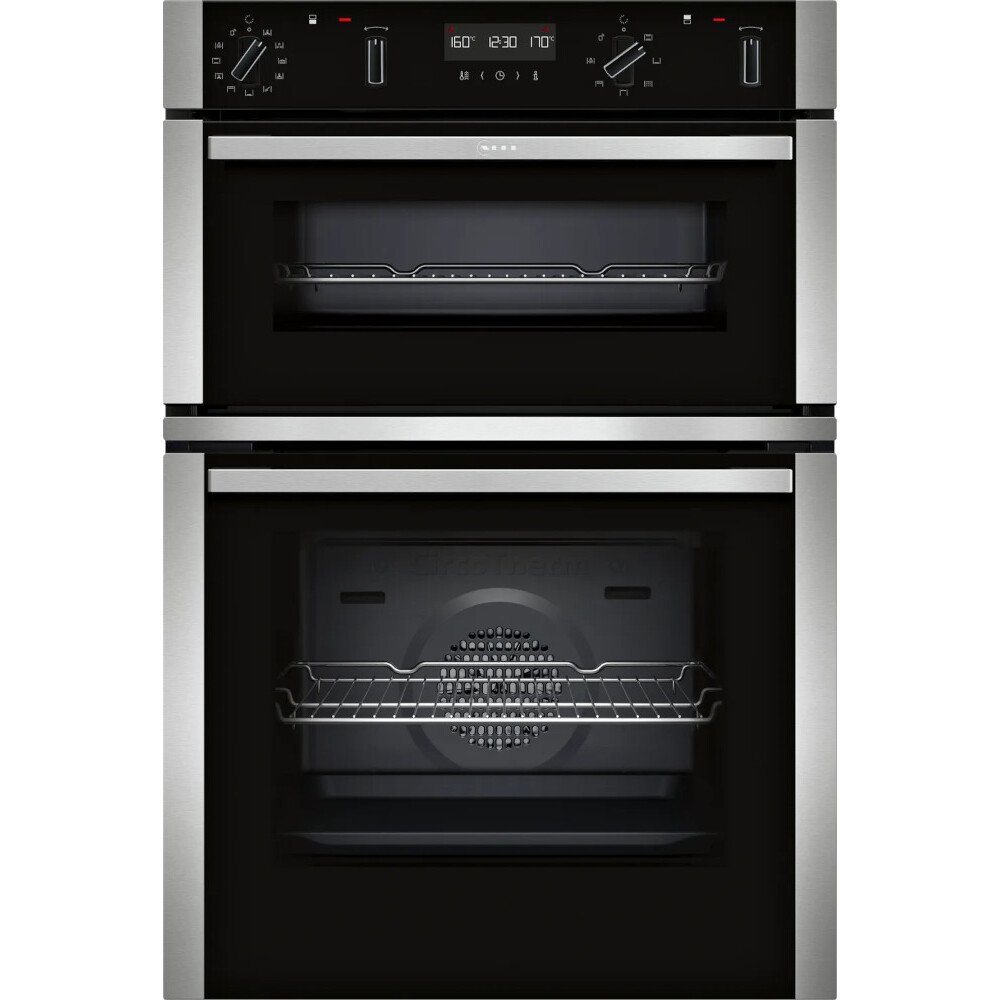
Built-in ovens
A built-in oven sits within your kitchen cabinets at eye level. This option makes it easy to keep an eye on your food without bending down, ensuring it's cooked to perfection. Single ovens slot into your kitchen units easily, but if you need more room to create your favourite meals, there are also built-in double ovens to choose from.
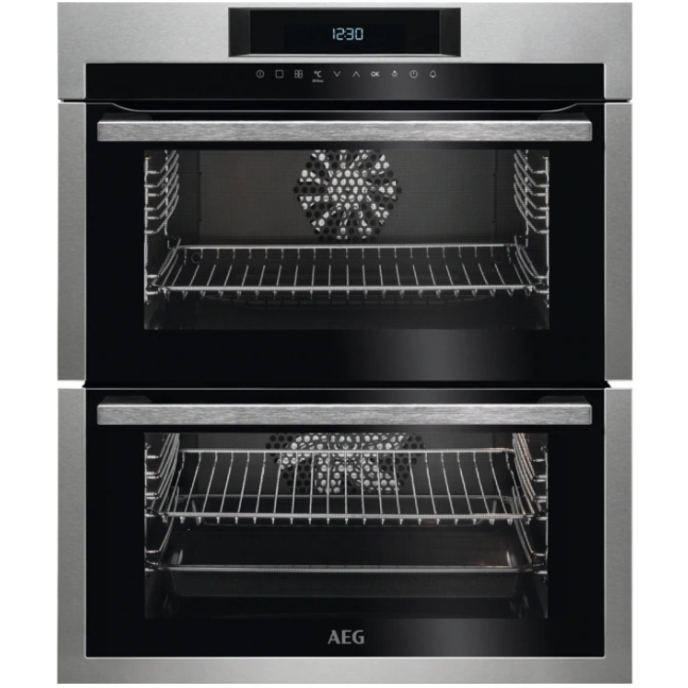
Built-under ovens
If you'd prefer your oven to sit under your kitchen counter, built-under ovens are a good choice. Built-under ovens integrate neatly into your kitchen's design, and you'll be able to choose a different hob for the counter above, whether you prefer electric or gas. Built-under ovens tend to be double, rather than single
5. Measure for your oven size
Once you've chosen the type of oven you'd prefer, it's time to measure up! Make sure your oven fits in the space you have in mind by following our instructions:
Built-in ovens
Built-in ovens vary in height, making them a little more difficult to measure up. Compact built-in ovens are around 45cm tall, while double built-in ovens are typically 89cm in height. The width and depth measurements are quite standardised to fit a conventional oven cabinet
- Measure the height of the available space in your oven cabinet.
- If you're looking at single or compact ovens, check the height of products as you shop (this should be between 45cm and 60cm). Make sure your new appliance will fit into the oven cabinet.
- After a double oven? The same process applies here, but in this case the ovens will tend to be around 89cm tall. Check that your oven cabinet has enough height room.
- The width and depth of single and double built-in ovens should be standard because they're designed to fit into conventional oven cabinets whilst allowing enough room for ventilation. With this in mind, you don't need to worry about measuring these dimensions - just the height!
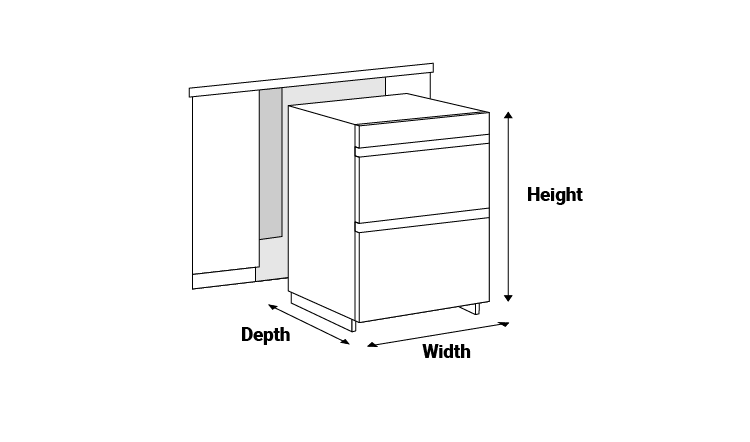
Built-under ovens
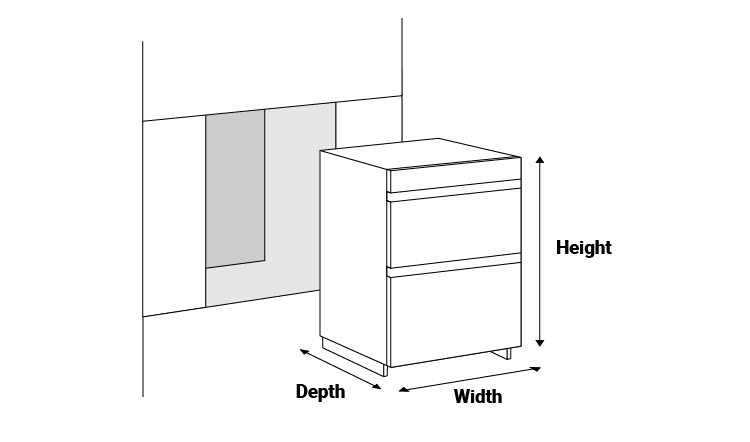
Built-under ovens come in fairly standardised sizes as they're designed to sit neatly beneath a kitchen counter. They tend to stand around 70-72cm tall (although some taller models are available for high counters). The width is usually between 56cm and 60cm, whilst the depth should be 54-58cm.
- Measure the height of the available space under your counter.
- As you shop for a new built-under oven, check the height measurements to ensure that the appliance will fit snugly under the kitchen worktop.
- Measure the width of the available space between your other kitchen units.
- Check the width of appliances you're looking at to make sure they'll fit widthwise.
- Built-under ovens are usually made with a depth of 54-58cm. This should allow your new appliance to slide neatly under the counter with room for the wiring at the back, but measure the depth of the space just in case.
6. Features to consider
As technology advances, many new ovens come with a range of features to make your life in the kitchen a little easier. Consider the following functions when searching for your new appliance:
Smart oven technology:

Smart ovens use Wi-Fi to connect your smartphone to your appliance. Control your oven remotely using an app, with a range of different functions including preheating, changing cooking settings and checking how your food is cooking, all in the palm of your hand.
Self-cleaning technology:

Short on time, or simply hate cleaning your oven? Pyrolytic ovens heat up to 500 degrees, so any spills or grease can be burnt away.
Digital controls:
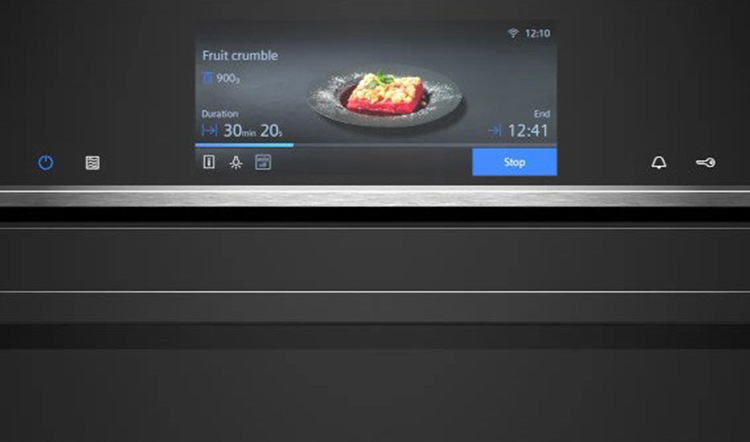
Say goodbye to conventional knobs and buttons; digital controls allow you to set specific times via an electronic interface. This looks sleek for the perfect modern kitchen.
Steam cooking:

A healthy and convenient alternative, steam cooking locks in nutrients and moisture, for faster cooking times and the ability to reheat food more effectively than a microwave.
Slide-away doors:
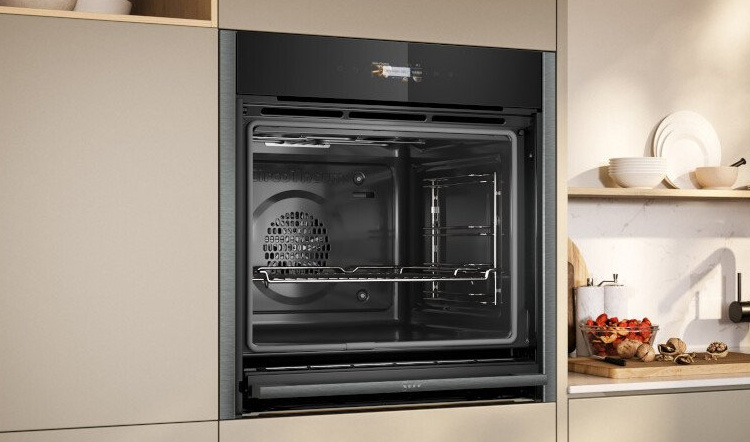
Slide your oven door into a recess when you open it, for more space when removing food. The contents of your oven become more accessible, and stop things from getting caught on the door.
Programmable timers:

Cook your food with the help of specific time settings. Once the time is up, your oven will alert you when your food is ready and switch itself off automatically so it doesn't burn.
7. What about oven energy ratings?
If you're looking for an oven that reduces your energy bills or your impact on the environment, you'll need to consider energy ratings. These ratings are all listed alongside our ovens so you can find them easily. Our appliances are rated from A+++ to G, with A being the most efficient.
8. Shop for your favourite oven brand
Now you've got a better idea of the oven you're going to buy, it's time to choose your brand. We have plenty of choice, whether you want to complete a set of appliances with the same brand, or you're choosing an oven with a range of great features - we have an option for you. From AEG to Hisense, to Bosch and more, explore our range of brands now.
Buying a new oven FAQs
Still have questions about buying your perfect oven? If you can't find what you're looking for above, read our FAQs, or get in touch with our friendly team, who'd be happy to help.
What is a convection oven?
A convection oven (also known as a fan oven or fan-assisted oven) circulates air around the oven to distribute heat and cook food evenly. The increased circulation of air also makes a convection oven cook food faster than a conventional one. They're a great all-round choice and are particularly useful for baking and roasting.
What is a conventional oven?
A conventional oven uses two heating elements: one at the bottom of the oven and the other at the top. Whereas convection ovens circulate heat evenly, conventional ovens don't have a fan and so produce hotter and cooler areas. This causes food to cook slowly or more quickly, depending on where it is placed, enabling you to cook multiple meals at the same time.
Many fan-assisted ovens also give you the option to cook using the conventional method.
What is a steam oven?
Steam ovens use steam rather than hot air to cook food. This cooking method locks in the nutrients and moisture in your food. Steam is a more effective method of reheating than a microwave. This type of oven also cooks food faster than conventional ovens, especially with larger dishes.
What do self-cleaning ovens do?
Pyrolytic self-cleaning ovens can heat up to around 500°C using a specialised cleaning function. Any food spills and grease on the lining of your oven will burn away at this temperature, so all you have to do is sweep away the ash.
How do I use a self-cleaning oven?
We recommend reading your oven's manual before using the self-cleaning function. That said, the following general tips apply when using a pyrolytic self-cleaning oven:
- Before starting the pyrolytic function, remove everything from inside the oven including the racks.
- Next, scrape off as much excess bake-off food or grease as you can.
- Lock the oven door before turning on the self-cleaning mode (some models come with a lever whilst others lock automatically).
- Use the controls to set the self-cleaning timer. Two hours is enough for a light clean but an oven that's particularly dirty might need three or four.
- Once the cleaning cycle has ended, leave the oven to cool down
- Finally, wipe away the ash that's left at the bottom of the oven (you could even use a vacuum cleaner for this part if you can reach).
How do the energy ratings work?
The energy ratings of ovens are rated on a scale of A+++ to G, with A+++ being the most energy efficient
Where should I put my oven in the kitchen?
You could choose to position your oven so that it forms part of your kitchen units, either in the middle or at the bottom - in this case, look for a built-in oven. If you'd prefer to have your oven sitting underneath the counter, then a built-under oven is the right choice for you.

 Added to your basket
 You've added an item to your basket.