












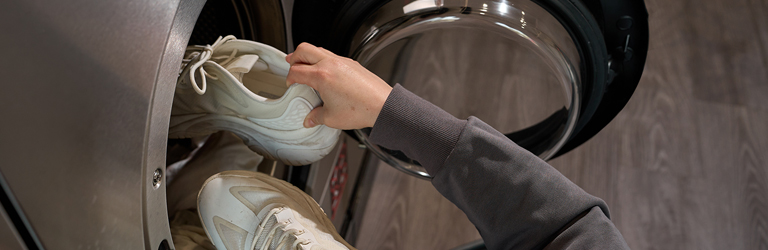
How to Wash Shoes Using Your Washing Machine
How to Wash Shoes Using Your Washing Machine
Are your crocs looking a little shabby? Or maybe your trainers have seen better days. Not to worry! You can safely wash your shoes in the washing machine - with a few conditions.
Avoid washing shoes made of animal products, such as leather and suede, and always opt for a cold cycle to give your shoes a new lease of life. Just be sure to check the washing instructions first.
Find out everything you need to know about washing your shoes in the washing machine safely, so your favourites come out looking great - and intact.
Which shoes can be washed in the washing machine?
Shoes made of animal products, like leather or suede, shouldn't be put in the washing machine as they can be easily water-damaged. Likewise, you should take extra care with delicate shoes made out of satin and silk. Trainers made of cotton, nylon or polyester can all be washed safely in the washing machine.
Let's take a closer look at the shoes that you can put in the washing machine when they're looking a little worse for wear:
| Type of shoes | Temp. & Spin Speeds | Washing tips |
|---|---|---|
| Trainers | 30-degree, gentle cycle lasting around 30-40 mins. |
|
| Crocs | 30-degree gentle, cold cycle. No spinning or rinsing. |
|
| Slippers | Cold wash and a delicate cycle |
|
| Fur-lined shoes | Never - handwash only |
|
What are the risks of washing shoes in the washing machine?
If you wash your favourite pair of shoes on the incorrect setting, you may end up with Ill-fitting, misshapen, or broken shoes. Let's look at the issues you'll face if you wash your shoes incorrectly:
- Shrinkage: Washing your shoes at high temperatures can cause shrinkage. This typically happens when shoes are washed on a too-high temperature setting. Always check the care instructions that come with your shoes before washing. If you're in doubt, always opt for a cold, gentle wash.
- Loose adhesive: Your shoes are likely held together by adhesive in some way - this could be the sole or other design elements. Washing at too high a temperature or too vigorously means the adhesive can come loose, damaging your favourite pair of shoes.
- Swollen seams: As well as adhesive, your shoes may be sewn together. Moisture and high temperatures can cause seams to swell, affecting the structure of your shoe.
- Disintegrating soles: High temperatures can also cause the soles of your shoes to disintegrate.
- Lose shape: Some shoes, like Crocs, can become misshapen if they're washed at too high a spin speed or put on a tumble dryer cycle.
Whether your trainers are looking dull or your Crocs are covered in mud, checking how to wash your shoes according to material and style is essential.
Should you hand-wash shoes?
Tip: If your shoes are delicate or made of premium materials, structured or have embellishments, you should always handwash them to prevent any damage.
Yes. If you're unsure about putting your shoes in the washing machine, handwashing is preferable.
General handwashing
Good for fabric or mesh trainers and lightly dirty shoes.
- Remove the laces and any insoles from your shoe.
- Use a soft toothbrush to remove any light dirt.
- Mix a small amount of detergent with lukewarm water.
- Dip a cloth into the solution and apply it to your shoes.
- Wipe away the soap, and leave it to dry.
DON'T: Soak or submerge your shoe.
Handwashing leather shoes
Great for keeping your trainers and smart shoes looking good as new.
- Firstly, wipe the material with a damp cloth.
- Dilute a tiny bit of leather cleaner or soap.
- Wipe in circular motion around the areas that need most attention.
- Use a damp cloth to wipe off any residue.
- Once your shoes have dried, use a conditioner to prevent cracks.
DON'T: Soak as leather can become stiff and stain.
Handwashing suede shoes
Great for cleaning boots or loafers.
- Let any mud or dirt dry completely.
- Use a suede brush or toothbrush to lift dirt.
- Use a suede eraser for stains, or add a small amount of white wine vinegar to a cloth.
- Brush again to restore the texture.
DON'T: Use too much water. Use small amounts, as it can stain suede.
How to dry shoes after washing
Drying your shoes correctly after you've washed them is just as important as washing them safely.
- Always air dry your shoes - tumble drying can cause shrinkage.
- Stuff them with newspaper - this absorbs moisture and keeps their shape.
- Keep away from the radiator or direct sunlight - this can dissolve glue and cause shrinkage.
Tip: Make sure you let them dry fully before wearing them to prevent unpleasant smells.
Shoe-washing mistakes to avoid
Avoiding high temperatures, washing with harsh detergents and washing delicate materials are all common mistakes that should be avoided when cleaning your shoes:
- Washing at the incorrect temperature: Hot water can affect the structure of your shoes, weakening and softening the glue, causing separation. The heat from the wash can also warp the rubber components of your shoes.
- Using harsh detergents: These can strip away more than just dirt, breaking down fabrics, drying out coatings and fading colours.
- Not removing laces from trainers: This can cause uneven cleaning and damage. Eyelets can also become loose.
- Washing faux-fur-lined shoes or boots: Faux-fur and shear linings shouldn't be soaked in water. It can cause the fibres to mat together and lose their texture. The lining may also start to pull away from the shoe.
- Drying your shoes in the tumble dryer: This will ruin your shoes. Heat can warp and shrink shoes and soften glue. Hard components, like the sole of the shoe, can cause banging, damaging the shoe and the dryer.
It's essential that you only use your washing machine for cotton, polyester and nylon shoes. Delicates should always be hand-washed to ensure they maintain their structure.
Looking for a washing machine that can tackle everything from shoes to gym kits to towels and bedding? Find appliances from the biggest brands, like AEG, Bosch, Hotpoint and more at Marks Electrical.

 Added to your basket
 You've added an item to your basket.